
How Are Memory Care Staff Trained to Respond to Dementia-Related Behaviors?
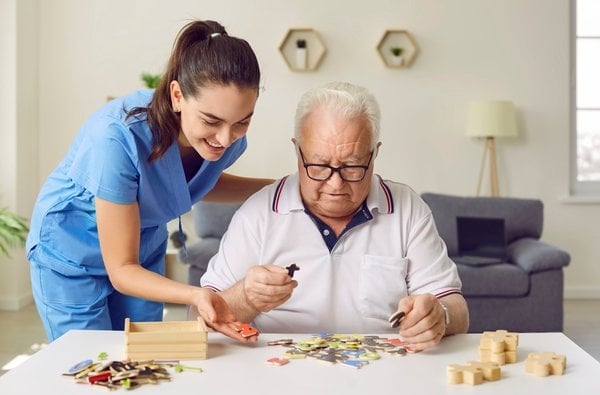
Memory care staff are trained to respond to dementia-related behaviors with patience, calm communication, and person-centered support. Rather than treating an action as simply difficult, trained team members learn to consider what may be causing distress and respond in a way that helps the person feel safer and more comfortable.
For families exploring memory care in Longview, Texas, understanding this training can make it easier to recognize what thoughtful dementia support should look like from day to day.
What Do Dementia-Related Behaviors Mean?
Dementia-related behaviors are often a way of communicating a need, feeling, or reaction when words become harder to use. A person may pace, repeat a question, resist help, call out, become worried, or react strongly to something that feels confusing.
That response may be connected to a change in routine, too much noise, unfamiliar surroundings, frustration, fear, hunger, thirst, or discomfort. Memory care training helps team members slow down and consider what might be happening before deciding how to respond.
This approach matters because the goal is not simply to stop a behavior. It is to better understand the person and provide support that fits the situation.
How Are Memory Care Staff Trained to Communicate?
Memory care staff commonly learn communication techniques that make conversations easier to follow and less overwhelming. That can include using a calm tone, making eye contact, giving the person time to respond, and keeping questions or directions simple.
Team members may also learn to avoid arguing or repeatedly correcting someone when doing so could increase confusion or frustration. Instead, they can acknowledge the person’s feelings, offer reassurance, or gently shift attention toward something more comfortable.
Good communication also means paying attention to facial expressions, body language, and changes in mood. When spoken communication becomes difficult, these signals can provide useful clues about what a person may need.
How Do Staff Respond When Someone Becomes Upset?
When a person becomes upset, trained memory care staff generally focus on staying calm, reducing tension, and considering what may have triggered the reaction. A measured response can make the interaction feel less stressful while giving the team member time to understand what is happening.
Depending on the situation, helpful responses may include:
- Speaking slowly and reassuringly
- Reducing noise or other distractions
- Offering a familiar activity or quieter setting
- Giving the person extra time instead of rushing
- Redirecting attention without arguing
- Looking for patterns that could help explain the reaction
Routine and surroundings can also influence how comfortable a person feels. A busy room, several conversations happening at once, or an unexpected change may feel overwhelming. Predictable routines, familiar cues, and calmer spaces can make the day easier to navigate.
There is no single response that works for every person or every moment. Dementia affects people differently, which is why flexible and personalized support is such an important part of memory care.
Why Does Knowing the Person Matter in Memory Care?
Knowing a resident’s history, routines, interests, preferences, and dislikes can help staff make everyday interactions more personal. Person-centered dementia support considers the individual behind the diagnosis rather than relying on the same approach for everyone.
For example, someone who becomes restless at a certain time of day may respond well to a familiar activity, conversation topic, or quieter environment. Another person may feel more comfortable when a task is explained one step at a time.
Families can play an important role by sharing details about long-standing routines, favorite music, past hobbies, meaningful memories, and common sources of frustration. That information can give a memory care team more context for understanding the person’s needs.
For families deciding between different supportive options, learning about both assisted living and memory care can also help clarify how the level and type of support may differ.
What Should Families Look for in a Memory Care Community?
Families do not need to know every detail of dementia support before visiting a community. Asking a few focused questions can reveal a great deal about how team members are prepared to handle difficult moments and provide everyday support.
Consider asking:
- What dementia-specific training do team members receive?
- How do staff respond when a resident becomes anxious or upset?
- How does the team learn each resident’s routines and preferences?
- How are families involved in sharing information about their loved one?
- How does the team adapt daily support as a resident’s needs change?
The answers can help families understand whether a community takes a thoughtful and individualized approach to memory care.
Parkview on Hollybrook in Longview, Texas, offers Memory Care with specially trained team members, personalized daily experiences, one-on-one engagement, and family collaboration. Families who would like to learn more can schedule a tour of Parkview on Hollybrook to see the community and ask questions about how its Memory Care program supports residents and their families.